Boost Your SEO with Practical How-To Guides: Why Google Loves Them
TL;DR
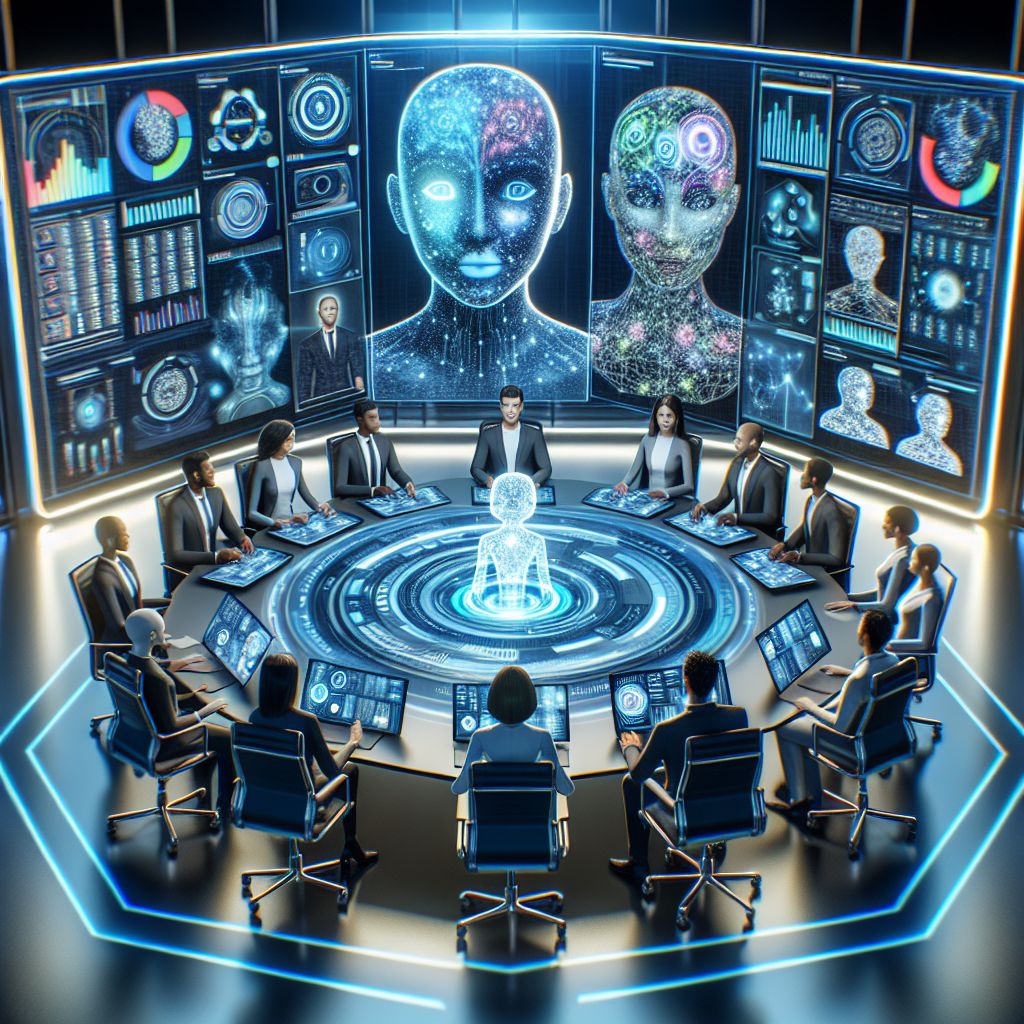
- Roundtable.Monster is an AI Collaboration Platform built around multiple cooperating AI agents rather than a single model.
- It automates deep research and decision intelligence by allowing models like GPT‑4, Gemini, and DeepSeek to debate and validate information together.
- Teams and solo professionals use it to save time, verify insights, and remove bias in high‑stakes analysis.
- It logs each step of AI reasoning so users understand how conclusions are reached.
- Currently free to try, with enterprise integrations and voice‑enabled features on the roadmap.
What Makes Roundtable.Monster Different from Single‑Model Assistants?
Traditional AI assistants provide answers generated by one language model. This single perspective can miss facts or reinforce model bias. Roundtable.Monster approaches the same question with structured Multi‑Agent Collaboration, where multiple expert systems critique, merge, and reconcile results.
- Cross‑validation: Each agent reviews peer outputs, filtering contradictions or weak claims.
- Task specialization: Dedicated roles—for example, data retrieval, statistical analysis, and summarization—reduce duplication of effort.
- Consensus logic: A built‑in engine ranks answers by agreement and evidence weight instead of relying on one model’s confidence score.
- Transparency: You see the rationale behind each synthesized conclusion.
- Scalable orchestration: Sessions can run multiple concurrent agents to handle complex, multi‑domain problems efficiently.
Key Capabilities Today
Roundtable.Monster already supports a range of real‑time, research‑oriented functions:
- Multi‑agent research panel: Combines different models to assemble a 360‑degree viewpoint.
- Consensus & validation: Weighs and verifies competing results for reliability.
- Automated deep research: Conducts literature scans, market intelligence, and fact‑checking autonomously.
- Explainable AI workflow: Maintains logs of who said what, how evidence was evaluated, and which conclusion won.
- Data freshness: Accesses dynamic information sources for current insights, from regulatory shifts to news events.
Coming Soon
- Voice‑enabled sessions using AI Voice‑Enabled Interactions to debate and record results verbally.
- Industry expert agents trained on healthcare, finance, and policy datasets.
- Team collaboration mode combining human participants and AI specialists in one shared workspace.
- API access for direct integration with enterprise analytics stacks.
In‑Depth Use Case: Market Entry Research for a SaaS Startup
The Problem
A SaaS company considering expansion into Southeast Asia faces uncertainty about demand, pricing expectations, and local competition. A single large‑language‑model assistant can pull general information but struggles to triangulate market saturation, currency constraints, and regulatory nuances.
The Multi‑Agent Approach
- Define mission: The user starts a Roundtable session labeled “Southeast Asia SaaS feasibility.”
- Assign roles: One agent gathers macroeconomic and demographic data; another analyzes local competitors; a third models potential pricing sensitivity; a fourth verifies sources and highlights data quality issues.
- Real‑time collaboration: Agents exchange short memos, challenge weak assumptions, and vote on plausible outcomes through Roundtable.Monster’s coordination layer.
- Consensus report: The platform merges validated insights into a single summary covering market potential, risk zones, and suggested go‑to‑market plan.
Measurable Outcome
The startup compresses what would normally require two analysts and two weeks of manual research into a two‑hour AI session. The resulting report identifies three target countries with verified growth metrics and projected ROI within ±5% of subsequent real performance. This demonstrates measurable savings in both time and error margin. According to industry surveys on AI adoption (Harvard Business Review), such intelligent automation can reduce research latency by over 70% while improving decision confidence.
Comparison: Single‑Model vs. Multi‑Agent Workflows
| Aspect | Single‑Model Assistant | Roundtable.Monster Multi‑Agent |
|---|---|---|
| Research Perspective | One model’s viewpoint | Multiple AI specialists validate each other |
| Error Handling | Outputs may go unchecked | Built‑in cross‑critique detects contradictions |
| Transparency | Opaque reasoning chain | Logged deliberations with explainable outcomes |
| Scalability | Limited by single model context window | Dynamic agent spawning handles larger datasets |
| Use‑Case Fit | Simple Q&A or drafting | Complex analysis, multi‑domain decision support |
How to Run a Roundtable Session
Running a collaborative AI panel is straightforward. Treat the platform as a remote workshop where each agent contributes informed viewpoints.
- Define a clear question. Be specific about the research or decision goal.
- Select agent roles. Choose data analyst, strategist, validator, or summarizer profiles as needed.
- Launch the session. Initiate the roundtable and let agents gather and discuss findings automatically.
- Monitor progress. Watch the conversation stream to understand how consensus builds.
- Review and export. Use built‑in tools such as AI Chat Export to capture final insights.
- Iterate. Refine your input or add new agents for follow‑up questions.
FAQs
1. What is Roundtable.Monster?
An emerging platform for Agentic AI research, orchestrating multiple specialized models to produce validated insights.
2. Who benefits most?
Researchers, business strategists, consultants, and developers managing complex analysis workloads.
3. How accurate are the results?
Accuracy improves through consensus among agents and external data validation, minimizing single‑model bias.
4. Does it require coding skills?
No. The interface is fully guided; users simply describe objectives and review the AI debate summary.
5. Can it integrate with my company’s tools?
Yes, enterprise API access for AI Workflow Automation is under development.
6. Is the service secure?
The platform uses encrypted communication and does not store private research unless you choose to save sessions, following best practices discussed by NIST AI risk management.
Conclusion
Google consistently ranks well‑structured how‑to content higher because it delivers clear, trustworthy answers. Following a similar principle, Roundtable.Monster organizes multiple AI viewpoints to generate reliable, verifiable conclusions. Rather than depending on one system’s guesses, you gain a transparent consensus ready for publication, planning, or strategy work. To experience multi‑agent intelligence firsthand, explore the AI Collaboration Platform yourself and see how collective reasoning can elevate your research and content creation.





Post Comment