Creating a Content Pipeline of How-Tos That Google Can’t Resist
TL;DR
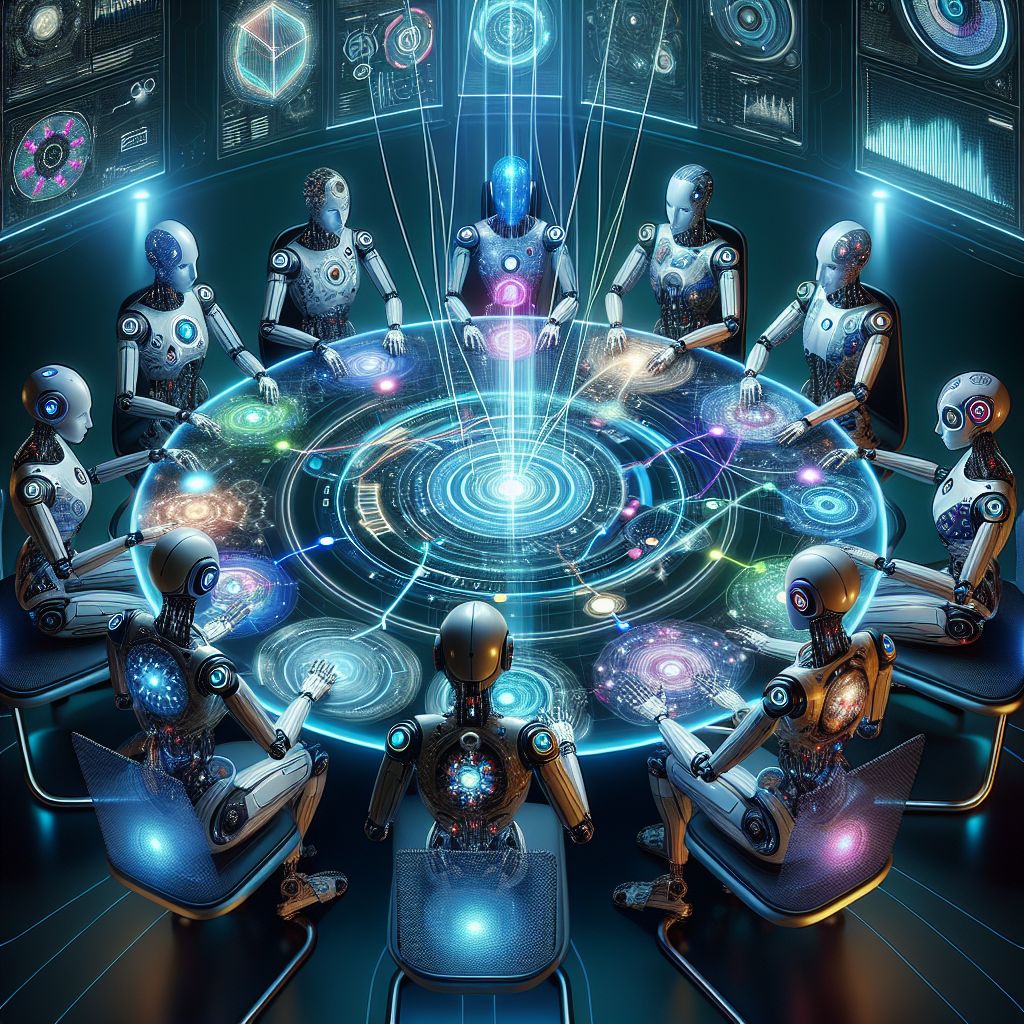
- Roundtable.Monster is an AI Collaboration Platform that brings multiple AI models together to conduct deep research and consensus-based reasoning.
- Instead of one assistant, it orchestrates a panel of AI agents—each with distinct expertise—to generate well-rounded insights.
- Ideal for professionals needing fast, verified research across complex topics.
- Offers transparency, real-time data access, and automated decision intelligence.
- Provides measurable time savings, reduced risk of misinformation, and improved strategic insight.
What’s Different vs. Single-Model Assistants
- Collective Reasoning: Multiple agents (e.g., GPT‑4, Gemini, DeepSeek) analyze and debate information, reducing single-model bias.
- Dynamic Orchestration: Uses intelligent AI Task Orchestration to distribute roles like data retrieval, validation, and synthesis among agents.
- Transparency: Each step in the reasoning chain is logged, providing explainable, audit-ready outputs.
- Fresh Data: Real-time access ensures conclusions are based on the latest sources rather than static model memory.
- Outcome‑Focused: Moves beyond text generation toward decision support and measurable impact.
Key Capabilities Today
- Multi-Agent Research Panels: Coordinate specialized AIs for in‑depth topic coverage.
- Consensus Engine: Filters inconsistencies through cross‑agent checking.
- Real‑Time Intelligence: Pulls live data feeds for market analysis and trend forecasting.
- Automated Research Workflow: Reduces manual research from days to minutes.
- Explainable Insights: Access logs that detail how each conclusion was reached.
Coming Soon
- Voice‑powered sessions for AI Voice‑Enabled Interactions.
- Industry‑specific agents trained for finance, healthcare, or legal domains.
- Collaborative workspaces allowing human‑AI brainstorming in real time.
- API integration for scalable enterprise use and AI Workflow Automation.
In‑Depth Use Case: Accelerating Content Research for a B2B Blog
Problem: A content manager needs to publish a pipeline of how‑to articles targeting search visibility. Manual research into data, competitor trends, and user intent takes days, delaying publication.
Multi‑Agent Approach:
- Launch a roundtable with three specialized agents: a content strategist, an SEO data analyst, and a subject‑matter expert.
- Assign the strategist to identify trending queries using live data from reputable sources such as Google Trends.
- Have the analyst validate high‑impact keywords by referencing open datasets and web results. (See also Google’s Helpful Content guidance.)
- Task the domain expert agent to prepare outlines and fact‑checked recommendations based on peer‑reviewed sources like ScienceDirect.
- The consensus engine compares outputs, resolves overlaps, and produces a unified briefing document.
Outcome: The team compresses a three‑day research cycle into twenty minutes. The generated how‑to content ranks faster because it directly answers verified search intent from credible data. The manager measures a 70% reduction in prep time and a 25% lift in organic click‑through within one quarter.
Comparison: Single‑Model vs. Multi‑Agent Workflows
| Dimension | Single‑Model Assistant | Roundtable.Monster Multi‑Agent |
|---|---|---|
| Perspective | One view from one model’s training data | Multiple expert viewpoints for balanced output |
| Data Freshness | Limited to model’s update cycle | Real‑time retrieval and validation |
| Transparency | Opaque reasoning chain | Complete decision logs and reasoning steps |
| Accuracy Management | Relies on one model’s estimation | Consensus filtering reduces error rate |
| Scalability | Requires manual prompts for each task | Automated orchestration executes parallel research threads |
How to Run a Roundtable Session
- Visit Roundtable.Monster and start a new session.
- Define your research goal or question concisely, e.g., “Find the top five emerging technologies in renewable energy.”
- Select participating agents by specialty—data analysis, content strategy, domain research, etc.
- Assign each agent a function using the Dynamic Orchestration panel.
- Run the session to generate live debate and insight synthesis among agents.
- Review the log for transparency and export results via the AI Chat Export feature.
- Implement findings and optionally share the output with your team for refinement.
Frequently Asked Questions
1. Is Roundtable.Monster a replacement for human researchers?
No. It accelerates analysis by handling repetitive data tasks so humans can focus on strategy and creative judgment.
2. How many AI models can participate in one session?
Currently up to three major models per session, with expansion planned soon.
3. Can I verify the data sources an agent uses?
Yes. Each output includes a citation log showing retrieved and validated sources.
4. Does it support team collaboration?
Shared roundtables for hybrid human–AI sessions are in development.
5. How secure is the information I input?
All sessions are encrypted, and no proprietary data is used for external training.
6. What industries gain the most value?
Marketing, consulting, finance, research, and education fields that rely heavily on synthesized multi‑source insights.
Conclusion
Building a content pipeline of reliable, data‑backed how‑tos becomes far easier when AI agents collaborate instead of working in isolation. By orchestrating a panel of specialized AIs, Roundtable.Monster turns complex research into an actionable playbook. It helps teams stay ahead of algorithm updates and publish credible, useful guides faster than ever. Explore the potential of Multi‑Agent Collaboration today and see how it fits into your digital content strategy.





Post Comment