Why ‘How’ and ‘Why’ Articles Steal the Show in Google’s Rankings

TL;DR
- Roundtable.Monster enables multi-agent AI collaboration for deep research and decision intelligence.
- It brings together multiple specialized AI models such as GPT‑4, Gemini, and DeepSeek to analyze, debate, and synthesize data.
- Ideal for researchers, business leaders, consultants, and developers seeking reliable, multi-perspective insights.
- Automates complex workflows—research, analysis, validation—in minutes instead of days.
- Offers transparent, explainable AI decision-making with real-time data intelligence.
From Single-Agent Answers to Multi-Agent Thinking
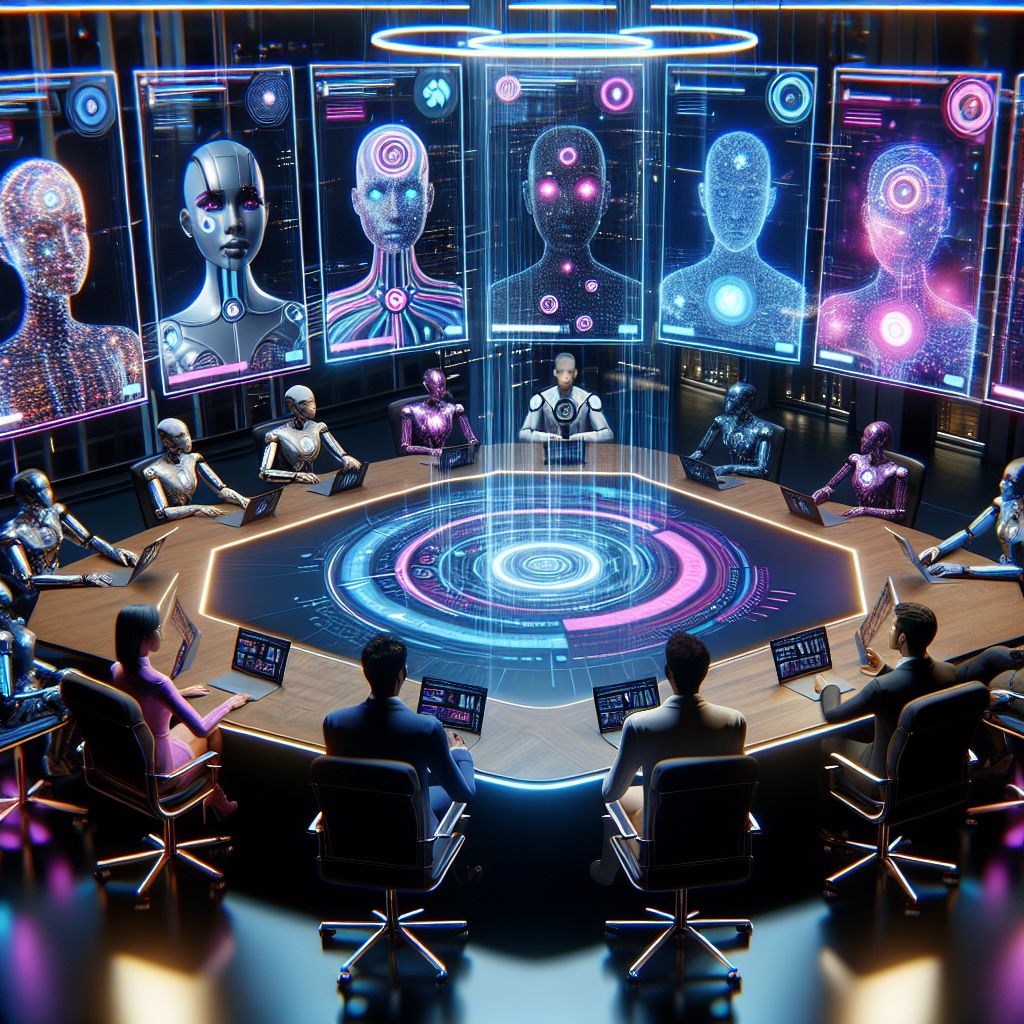
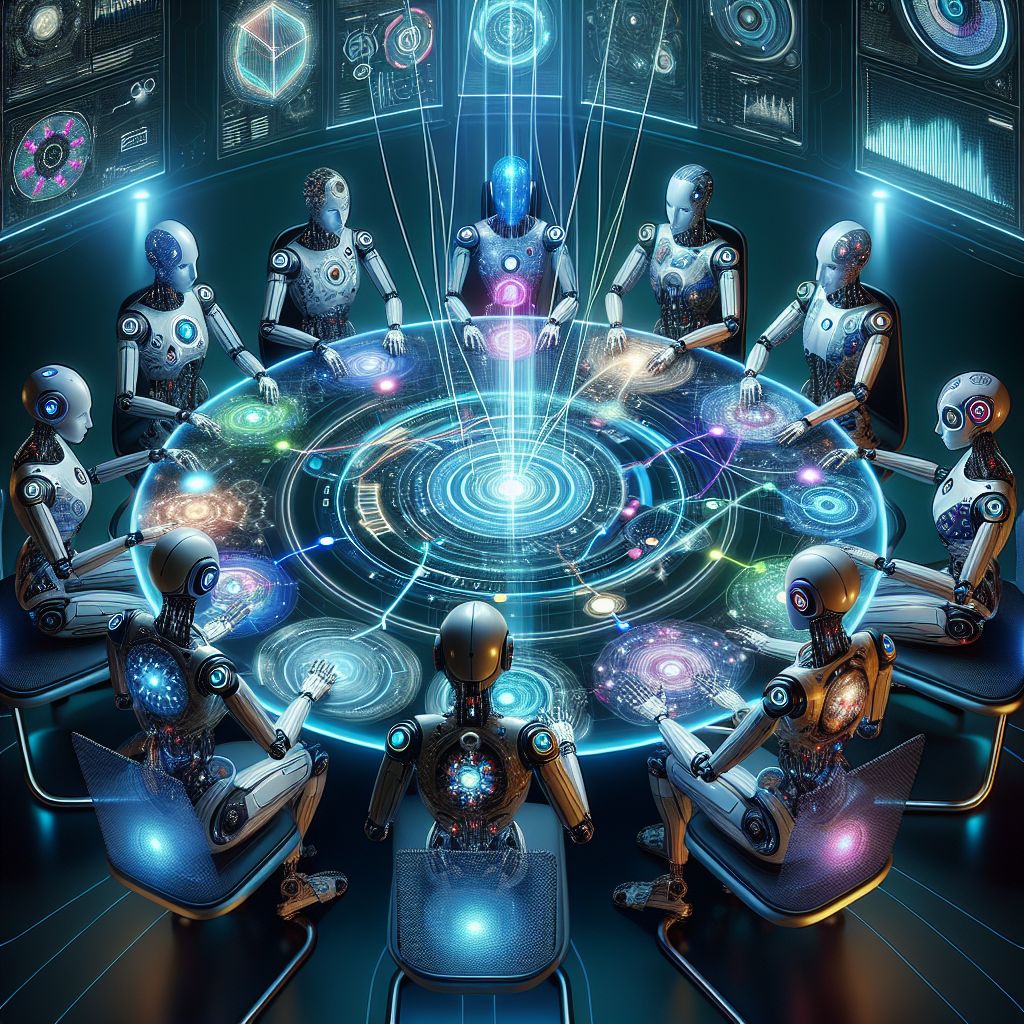
Search engines reward comprehensive, well‑reasoned content that answers both “how” and “why.” Roundtable.Monster embodies this concept in AI form. Instead of producing one‑dimensional outputs like a typical chatbot, it organizes multiple AI peers to reason through problems collaboratively—mirroring the depth that Google values in meaningful articles.
What’s Different vs. Single‑Model Assistants
- Diversity of Perspectives: Multiple AI agents represent different reasoning styles and training corpora, preventing narrow or biased interpretations of a query.
- Consensus Building: The platform filters contradictions and synthesizes outcomes validated across agents.
- Live Intelligence: Roundtable.Monster can access current news or data streams for up‑to‑date results, unlike static single‑model chatbots.
- Transparency: Users view logs showing how insights were contested and reconciled among agents.
- Scalable Orchestration: Tasks can be distributed to specialized AI roles—retrieval, analysis, forecasting—creating faster and richer results.
Key Capabilities Today
- Multi‑Agent Research Panels: Coordinate several AI engines for simultaneous topic exploration.
- AI‑Powered Consensus Engine: Cross‑check multiple responses for data reliability.
- Real‑Time Data Access: Integrate current market or scholarly sources for dynamic insights.
- Workflow Automation: Automatically organize research, comparison, and validation stages with AI Workflow Automation.
- Transparent Decision Records: Capture debates and resolution paths among AI agents.
Coming Soon
- Voice‑Enabled Sessions: Conduct verbal briefings with AI panels using AI Voice‑Enabled Interactions.
- Industry‑Specific AI Experts: Pre‑trained specialists for finance, healthcare, and legal data research.
- Team Collaboration Spaces: Merge human and AI participation in real‑time discussions via AI Real‑Time Collaboration.
- Enterprise Integration: Use APIs for embedding Dynamic Orchestration into internal systems.
In‑Depth Use Case: Market Expansion Research
Problem
A mid‑size consultancy wanted to evaluate opportunities in renewable energy storage markets. Traditional research—spanning quantitative data, regulatory reviews, and competitor analysis—would have taken weeks and demanded multiple analysts.
Multi‑Agent Approach
- Initiate Roundtable: The company starts a session on Roundtable.Monster, defining goals and datasets.
- Assign Roles: Agents are selected: one for industry literature scanning, one for data interpretation, one for risk modeling.
- Cross‑Validation: Findings are debated among agents; conflicting data triggers further checks from verified sources (Google Scholar, World Bank).
- Synthesis: A summary AI models key drivers and potential ROI scenarios.
- Human Review: Analysts review explanations and confirm high‑confidence insights.
Measurable Outcome
The consultancy reduced research time by 84%, delivering its client proposal within 48 hours. The multi‑agent workflow ensured multidimensional understanding—quantitative reliability plus qualitative reasoning—similar to why “how” and “why” articles win user trust and top rankings in Google results (Google E-E-A-T Guidelines).
Comparison Table
| Aspect | Single‑Model AI Workflow | Roundtable.Monster Multi‑Agent Workflow |
|---|---|---|
| Perspective | Single data interpretation | Multiple viewpoints debated and merged |
| Accuracy | Dependent on one model’s limitations | Validated through cross‑agent consensus |
| Transparency | Opaque reasoning process | Visible conversational and analytical trail |
| Speed vs. Depth | Fast, but potentially shallow responses | Optimized for both speed and depth through distributed tasks |
| Scalability | Limited by one AI’s context window | Expandable through orchestrated collaboration |
How to Run a Roundtable Session
- Visit roundtable.monster.
- Define your objective and preferred agent specializations (e.g., analytics, creative reasoning, data validation).
- Start a discussion thread and trigger AI Task Orchestration.
- Allow agents to debate and cross‑examine findings in real time.
- Review the transparent log showing how consensus was achieved.
- Export the synthesized output using AI Chat Export for documentation or reporting.
FAQs
1. What is multi‑agent collaboration?
It’s a setup where several AI systems jointly explore a problem, providing complementary insights—a core capability of the AI Collaboration Platform.
2. How is trust maintained in the output?
Each agent’s reasoning path is logged, and contradictions trigger re‑verification against external datasets.
3. Do I need prior technical knowledge?
No. The user interface abstracts complexity, letting users initiate advanced sessions with simple prompts.
4. Can I include my own data?
Yes. Upload datasets or specify URLs for the agents to analyze inside controlled sessions.
5. How does this improve article design or content insight?
By modeling multi‑perspective reasoning, writers and strategists can identify richer answers for “how” and “why” topics, improving authority signals per independent SEO research.
6. Is Roundtable.Monster free?
Currently, yes—users can explore full functionality at no cost during early access.
Conclusion
Whether you’re creating “how” and “why” thought leadership pieces or conducting complex business analysis, Roundtable.Monster’s multi‑agent design demonstrates how collaborative reasoning strengthens credibility and clarity. Explore the future of Agentic AI today and see how multi‑model discussions can elevate both understanding and outcomes.




Post Comment