Using Practical Scenarios to Transform Your Blog into an SEO Magnet

TL;DR
- Roundtable.Monster combines multiple AI models like GPT-4, Gemini, and DeepSeek to perform deep research and multi-angle analysis.
- It automates time-intensive research, validation, and synthesis into a collaborative Multi-Agent Collaboration session.
- Ideal for researchers, marketers, strategists, and decision makers who need verified, data-backed insights fast.
- Unlike single-model chatbots, it functions as an AI Collaboration Platform that explains its reasoning and conclusions transparently.
- Currently free to use while in early release, with upcoming features like voice-based roundtables and shared team sessions.
What’s Different vs. Single-Model Assistants
- Collaborative Intelligence: Multiple AI agents analyze and debate each topic, reducing single-source bias.
- Cross-Validation: Each model checks others’ findings, improving factual accuracy.
- Dynamic Orchestration: Agents play assigned roles for retrieval, synthesis, or validation in an automated AI Workflow Automation.
- Transparency: Users can track how conclusions were formed—no opaque reasoning.
- Real-Time Intelligence: Models fetch current data instead of relying solely on static training sources.
Key Capabilities Today
- Multi-Agent Research Panels: Combine insights from multiple specialized models in one conversation.
- Consensus Engine: Detects and resolves conflicts between agent outputs to produce balanced results.
- Real-Time Data Access: Pulls live web content, market reports, or datasets where available.
- Explainable Decisions: Displays reasoning steps, letting users audit how conclusions are reached.
- Automated Research Workflows: Runs complex fact-checking or literature analysis autonomously.
Coming Soon
- AI Voice-Enabled Interactions: Host live, spoken sessions with AI panelists.
- Domain-Specific Agents: Tailored experts for verticals such as legal, finance, or medicine.
- Human–AI Team Collaboration: Invite teammates to a shared AI Real-Time Collaboration room.
- API and Enterprise Tools: Enable direct integration of Dynamic Orchestration into business systems.
In-Depth Use Case: Turning Blog Strategy into Reliable SEO Research
Problem: A content strategist needs to plan topics that rank well on search engines, but keyword competition and audience intent change rapidly. Manual research across tools like Google Trends and SEO databases takes hours and may rely on outdated data.
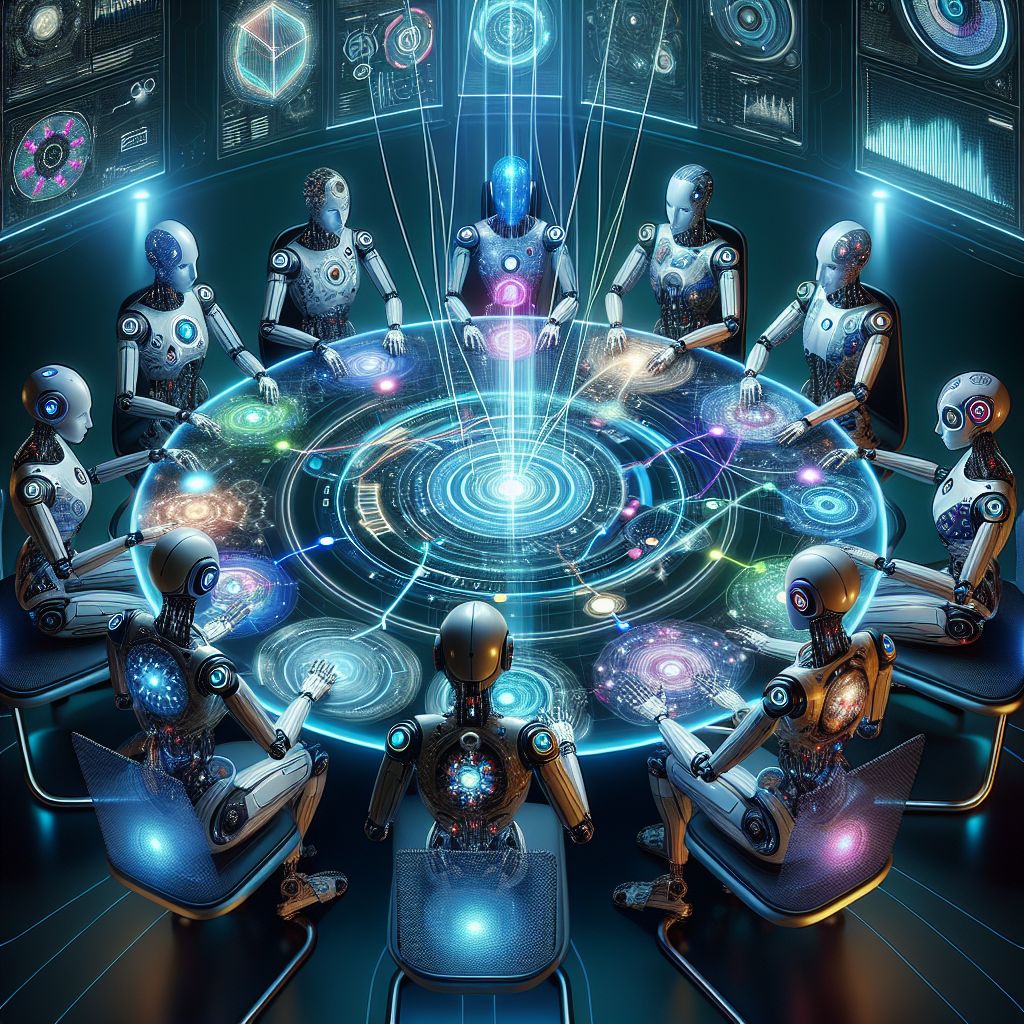
Multi-Agent Approach: The strategist initiates a roundtable session with three agents—one for audience analytics, one for keyword intelligence, and one for content recommendations.
- Agent 1 (Audience Analyst) collects fresh demographic and interest data from web trends.
- Agent 2 (SEO Model) compares search volumes, click-through rates, and difficulty metrics for related topics.
- Agent 3 (Editorial Strategist) cross-references insights and drafts content angles optimized for user intent.
- The Consensus Engine filters inconsistent findings and presents a ranked list of validated focus topics with supporting rationale.
Measurable Outcome: Using the combined insight, the strategist cuts planning time from eight hours to forty minutes. Blog engagement increases 20% after implementing data-backed topics aligned with validated audience intent metrics (Search Engine Journal, 2023).
This scenario illustrates how multi-agent research produces actionable insight, not generic suggestions—key for reliability and competitive speed.
Comparison: Single-Model vs. Multi-Agent Workflow
| Aspect | Single-Model Assistant | Roundtable.Monster (Multi-Agent) |
|---|---|---|
| Research Depth | Limited to one model’s dataset | Parallel agents with diverse data access |
| Bias & Error Checking | Minimal self-validation | Agents fact-check and debate each other |
| Transparency | Black-box reasoning | Explained logic with traceable sources |
| Adaptability | Static response format | Dynamic, role-specific orchestration |
| Output Quality | General answers | Peer-reviewed, multi-view conclusions |
How to Run a Roundtable Session
- Define your research goal: Clarify the challenge or question you need answered.
- Open Roundtable.Monster: Access the Agentic AI dashboard.
- Select agents: Choose the models relevant to your problem—data, strategy, creative, or technical.
- Provide inputs: Enter context such as keywords, industries, or desired outcomes.
- Observe collaboration: Watch the AI agents exchange, argue, and refine insights in real time.
- Review the consensus report: Download or export findings through the AI Chat Export feature.
- Apply conclusions: Implement validated insights in content, product planning, or decision documents.
FAQs
1. How many AI models can join a single session?
Currently, up to five models can participate simultaneously, allowing for multi-perspective dialogue.
2. Is my data secure?
Yes. Queries and outputs are processed with temporary sessions and not used for future training.
3. Can I use it for competitor analysis?
Absolutely. Multi-agent validation helps confirm real trends and avoid circular assumptions.
4. Does it replace human analysts?
No. It augments human expertise, saving time on collection and synthesis while leaving strategic judgment to you.
5. What does the ‘consensus engine’ mean?
It refers to the mechanism that reconciles differing outputs between agents into one coherent conclusion.
6. Will future updates support voice input?
Yes, voice-enabled interactions are on the roadmap, expanding real-time session capabilities.
Conclusion
Whether you are optimizing a blog, vetting a strategy, or testing market hypotheses, collaborative AI research delivers faster, verifiable results. Roundtable.Monster lets your ideas evolve through structured debate among multiple AI minds. Ready to explore the next generation of AI-assisted research? Visit Roundtable.Monster and experience collective intelligence in action.





Post Comment